The Great GLP-1 Compounding Dilemma
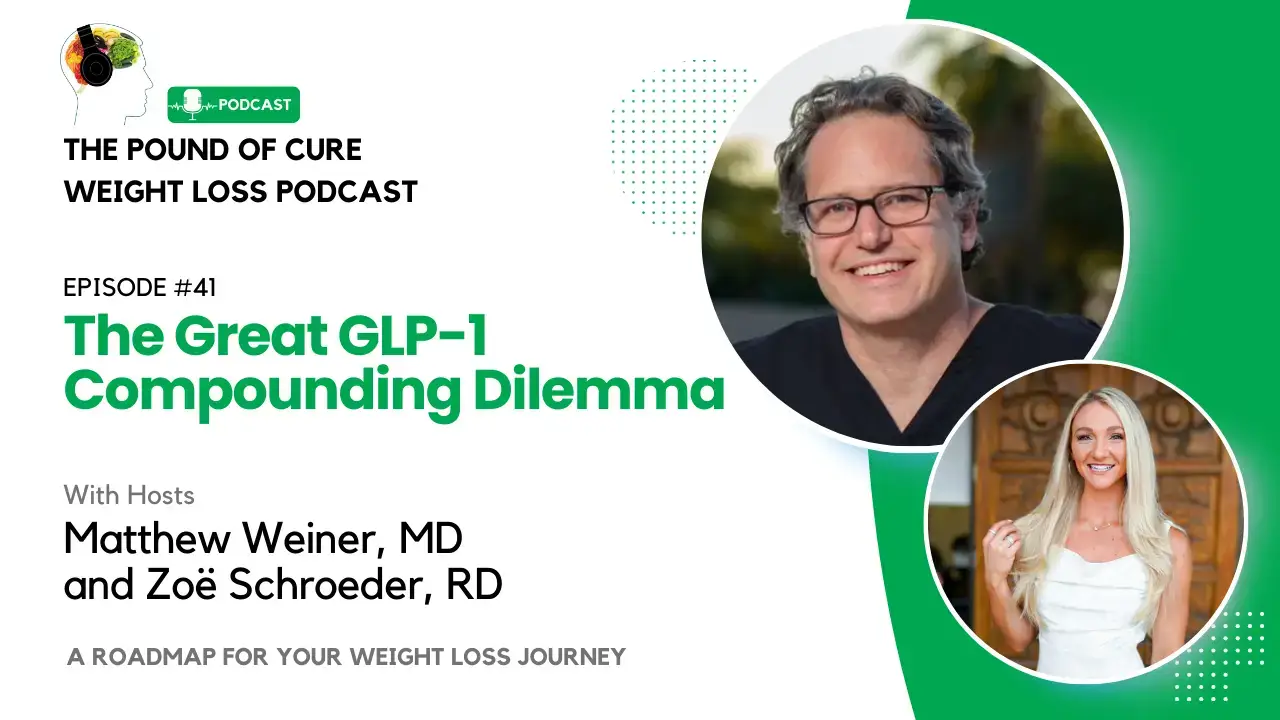
In this episode, we dive into GLP-1 Compounding for weight loss, covering Semaglutide, Tirzepatide, how they work, the legal landscape, and patient stories.
In Episode 41 of The Pound of Cure Weight Loss Podcast, hosted by Dr. Matthew Weiner and Registered Dietitian Zoe Schroeder, the duo dives deep into the controversial topic of compounded GLP-1 medications. These medications, which include popular weight loss drugs like Semaglutide (branded as Wegovy and Ozempic) and Tirzepatide (Mounjaro and Zepbound), have garnered significant attention in recent years due to their impressive results. However, shortages have opened the door for the use of compounded versions, leading to widespread debate on their safety, legality, and effectiveness.
What is a Compounding Pharmacy?
Dr. Weiner begins the episode by clarifying “what a compounding pharmacy is.” In traditional pharmacies, patients receive medications directly from pharmaceutical companies, which hold patents on these drugs. For example, Novo Nordisk owns the rights to Semaglutide, and Eli Lilly owns Tirzepatide. These companies are the only legal manufacturers of their respective medications in the U.S. and most other countries.
However, when there’s an FDA-recognized shortage, compounding pharmacies are permitted to produce alternative versions of these drugs. Compounding pharmacies mix ingredients to create a medication tailored to individual patient needs. For instance, a compounding pharmacy might produce a version of Semaglutide combined with vitamin B12. Although these pharmacies are regulated, there’s a gray area concerning the safety and effectiveness of compounded medications, especially for GLP-1 drugs.
The Surge in Compounded GLP-1 Medications
According to Dr. Weiner, approximately 2 million people have used compounded GLP-1 medications due to shortages of the branded versions. Compounded Semaglutide and Tirzepatide are often sourced from factories in China, many of which are FDA-licensed. While these medications are not “black market” drugs, the lack of strict patent enforcement raises questions about their legality and safety.
Despite being legitimate businesses, compounding pharmacies have drawn criticism from the pharmaceutical industry, particularly from companies like Novo Nordisk, which have invested billions in developing their blockbuster medications. These companies have filed lawsuits against compounding pharmacies, but the results have been mixed.
FDA and Obesity Society Concerns
The FDA has expressed concerns about compounded medications, warning that they are unregulated and their origins are often unclear. The Obesity Society, a leading authority in obesity treatment, also recommends against the use of compounded drugs. Dr. Weiner emphasizes that these concerns stem from a lack of transparency in the manufacturing process and the potential for errors in dosage or contamination.
However, Dr. Weiner points out that compounded medications do play an essential role in healthcare, especially for patients with specific needs. For example, some people may be allergic to a dye in a mass-produced drug and require a compounded version. While compounding is generally safe, its history isn’t without incidents. In 2012, a tragic event occurred when 64 people died after receiving contaminated injections from a compounding pharmacy.
Cost and Availability of GLP-1 Medications
One of the most intriguing parts of the episode was Dr. Weiner’s discussion on the cost of GLP-1 medications. Branded medications like Wegovy can cost $1,000 to $1,400 per month. However, compounded versions are often much cheaper. In fact, the Semaglutide compound can be purchased for around $4,000 per gram, which translates to a monthly cost as low as $76 for the highest dose. This massive price difference is one of the driving forces behind the popularity of compounded GLP-1s, despite the potential risks.
The podcast also touches on the issue of shortages, which, as Dr. Weiner explains, often stem from a lack of injector pens rather than the medication itself. The reliance on these pens means that patients are being denied access to life-changing treatments because of a piece of plastic, further complicating the situation.
GLP-1 Nutrition and Hydration Tips
In addition to discussing compounded medications, Zoe shares valuable nutrition tips for those taking GLP-1 medications. Since these drugs are designed to reduce hunger, they can also decrease thirst, making dehydration a real concern. This is especially important for people living in hot climates like Arizona, where temperatures regularly exceed 100 degrees Fahrenheit.
To combat dehydration, Zoe recommends setting reminders to drink water throughout the day. Whether it’s using a smartwatch or a flashing bracelet on a water bottle, these tools can help ensure that you’re staying hydrated. She also suggests stacking drinking water with daily habits, such as taking a sip at every red light or after sending an email. Staying hydrated is critical for overall health and can also aid in weight loss.
What the Future Holds for Compounded Medications
Towards the end of the episode, Dr. Weiner delves into the future of compounded GLP-1 medications. He explains that while compounded meds are currently allowed due to shortages, this isn’t a permanent solution. As soon as the FDA shortage is resolved, compounding pharmacies will no longer be allowed to produce these medications. In the long run, patients may need to rely on branded medications or wait until the Semaglutide patent expires, which could open the door for generic versions.
Dr. Weiner also breaks down the different types of compounding pharmacies, noting the distinction between 503A and 503B pharmacies. The smaller 503A pharmacies cater to individual patients’ needs, while the larger 503B pharmacies are held to more stringent regulations and mass-produce compounded medications.
Have Questions About Compounded GLP-1 Medications?
Throughout the episode, Dr. Weiner and Zoe encourage listeners to share their experiences with compounded medications. If you’ve used compounded GLP-1 drugs, they’d love to hear how they’ve worked for you, how much you’re paying, and whether you trust the source of your medication. You can reach out to them on social media or through the Pound of Cure website.
Be sure to subscribe to the Pound of Cure Weight Loss Podcast for more insights from Dr. Weiner and Zoe, and don’t forget to submit your questions for future episodes. Whether you’re curious about GLP-1 nutrition, compounded medications, or any other weight-loss topic, Dr. Weiner and Zoe are eager to help!