Novo Nordisk’s Weekend at Bernie’s
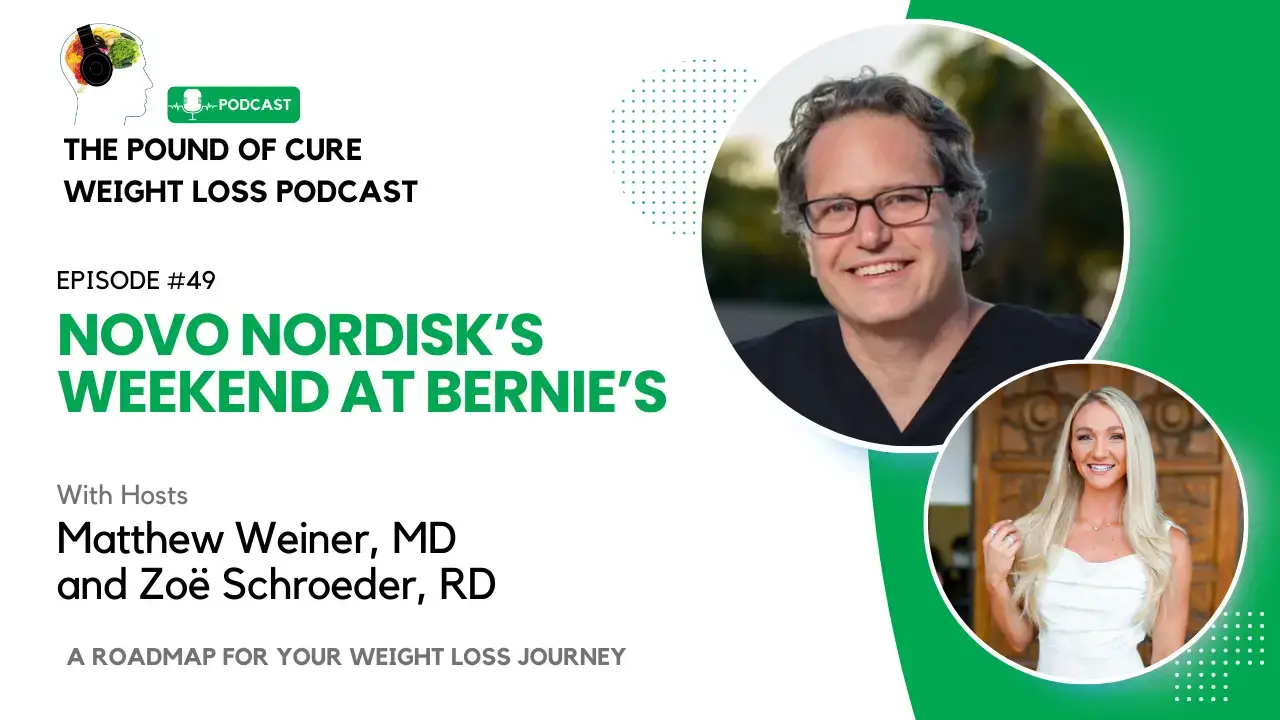
In Episode 49 of the Pound of Cure Podcast, Dr. Weiner and Zoe discuss obesity drug costs, pharmacy benefit managers, and Bernie Sanders’ Senate hearing with Novo Nordisk’s CEO.
In Episode 49 of the Pound of Cure Podcast, we tackle critical topics related to the high cost of obesity medications like Wegovy, the role of pharmacy benefit managers, and the systemic challenges in the healthcare industry driven by big pharmaceutical companies. This episode is timely, as Dr. Weiner and Zoe explore Bernie Sanders’ recent Senate hearing with Novo Nordisk’s CEO Lars Fruergaard Jørgensen. The episode is a blend of insightful commentary, discussions on healthcare policy, and the costs and accessibility of medications for weight loss and diabetes management.
Wegovy Cost: A Breakdown of High Prices and Limited Access
One of the focal points of this episode is the staggering cost disparity for Wegovy between the United States and other countries. Wegovy, a GLP-1 medication used for weight loss, costs around $1,349 per month in the U.S. compared to only $92 in the U.K. and similarly low prices in Canada and Denmark. As Dr. Weiner explains, Novo Nordisk charges American consumers 10 to 15 times more than people in other countries pay for the same medication. These prices are out of reach for many, even those with insurance, and they highlight a system built more on profit than on patient care.
This price disparity exemplifies broader issues within the healthcare system that often lead patients to pay more out of pocket, particularly for life-changing medications like Wegovy and Ozempic. With nearly three-quarters of Novo Nordisk’s revenue stemming from U.S. sales alone, it’s evident that the American market drives the company’s profitability. Yet, as Dr. Weiner explains, the exorbitant cost is a barrier for millions who could benefit from these medications but are left unable to access them due to financial constraints.
Big Pharma’s Influence: A Closer Look at Industry Profits
This episode dives into the immense influence of big pharmaceutical companies, or “Big Pharma,” on healthcare costs and policy. With recent public scrutiny on drug pricing, the Senate hearing aimed to hold pharmaceutical giants accountable for what many see as price gouging. Sanders highlighted that these inflated costs go beyond just obesity medications and impact access to everything from insulin to cancer treatments.
As Dr. Weiner notes, the rise in stock values for pharmaceutical companies like Novo Nordisk over the past decade directly correlates with the popularity of these medications. Novo Nordisk’s stock, for instance, has increased 368% over five years, with a significant portion of this increase attributed to its diabetes and weight-loss medications. Such profits bring into focus the influence Big Pharma has on the medical system, not just through pricing but also through lobbying and political contributions.
Dr. Weiner shares a compelling graphic highlighting that major political figures across both parties, from current and past presidential candidates to various senators, receive substantial donations from healthcare companies. This bipartisan funding is one reason that meaningful change often stalls, as both parties are deeply invested in maintaining the status quo.
Pharmacy Benefit Managers (PBMs): The Hidden Gatekeepers
Dr. Weiner and Zoe shift focus to Pharmacy Benefit Managers (PBMs) and their role in determining drug pricing and accessibility. PBMs act as intermediaries between insurers and pharmacies, ostensibly to negotiate better prices. In reality, they often add layers of cost and limit patient access to affordable medications. For example, a PBM might deny coverage for a patient’s GLP-1 medication, citing cost concerns, while simultaneously receiving incentives from pharmaceutical companies to push higher-priced drugs.
This “pay-to-play” dynamic creates financial hurdles that patients must navigate to get necessary treatments. Dr. Weiner discusses how PBMs, though intended to lower drug costs, often drive them higher. He emphasizes the importance of transparency in drug pricing and shares tips for patients trying to get GLP-1 medications approved through their insurance. He also mentions that navigating this process frequently requires persistence and sometimes even using “creative dosing strategies” to reduce costs.
Do We Really Need Health Insurance Companies and PBMs?
Dr. Weiner argues that the American Healthcare system could effectively serve patients without the heavy financial involvement of health insurance companies and pharmacy benefit managers. These entities, as he points out, do not directly deliver patient care but have inserted themselves as financial middlemen, extracting billions from the healthcare system while providing little to no actual healthcare service.
While healthcare truly requires a range of professionals—doctors, nurses, therapists, and other hands-on providers—the system can function without PBMs or insurance companies who don’t directly contribute to patient care. Removing these entities could create a more transparent and patient-centered approach to healthcare without sacrificing quality or access to necessary treatments.
Instead of adding value, these organizations complicate pricing, limit medication access, and, in many cases, raise costs through hidden fees and profit schemes tied to drug list prices. Dr. Weiner suggests that if PBMs and insurance companies were removed from the equation, the cost of care could potentially decrease significantly.
The Morality of Obesity Treatment Costs: Dr. Weiner and Zoe’s Takeaways
The podcast concludes with a reflection on the moral implications of this issue. Dr. Weiner and Zoe note that while the debate over access to medications often centers around obesity’s classification as a “self-inflicted” disease, this perspective ignores the complex, multi-faceted causes of obesity. Dr. Weiner argues that reducing obesity isn’t simply about improving individual willpower but about addressing it as a chronic, systemic disease that requires comprehensive treatment.
They touch on how obesity bias affects access to affordable care, as people with obesity are often held to a double standard compared to other chronic diseases like diabetes. Dr. Weiner underscores that obesity treatments like Wegovy represent a significant breakthrough, not only for weight loss but also for the improvement of metabolic health, including diabetes management.
Looking Forward: The Future of GLP-1 Medications in a Flawed System
To wrap up the episode, Dr. Weiner discusses the promising potential of GLP-1 medications, which, when combined with surgical interventions, nutrition, and lifestyle changes, have shown impressive results in sustained weight loss. He shares his excitement for continued advancements in combining these treatments, pointing to success stories where patients have lost up to 50% of their excess body weight by combining medication with bariatric surgery and comprehensive nutritional guidance.
This hopeful outlook stands in contrast to the barriers discussed throughout the episode. While the healthcare landscape remains challenging, Dr. Weiner remains optimistic that with patient advocacy, legislative change, and continuous innovation, real progress is possible in making these life-changing medications more accessible to all.
This episode serves as a comprehensive guide for those dealing with the high costs of obesity treatment and introduces ways to work through a challenging healthcare system that too often prioritizes profit over patient well-being.