Is this the end of GLP-1 Compounded Meds? Part 2
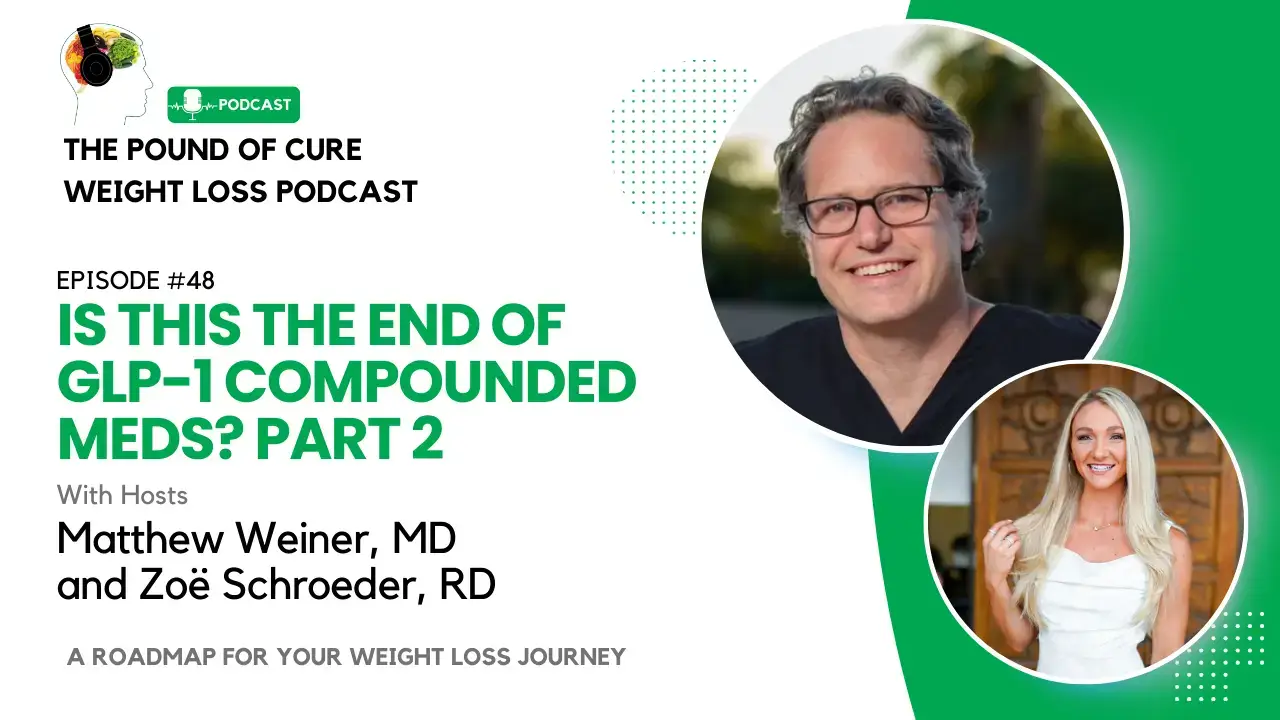
Dr. Matthew Weiner & Zoe Schroeder discuss GLP-1 compounded meds, the health halo effect, and diet myths on the Pound of Cure Weight Loss podcast.
In this episode of the Pound of Cure Weight Loss podcast, Dr. Matthew Weiner and Zoe Schroeder delve into some of the latest developments in obesity treatment, specifically focusing on the future of compounded GLP-1 medications, the role of the health halo effect in misleading consumer choices, and the diet myths that persist in popular culture. The conversation offers a wealth of insight into the science of weight loss and the evolving landscape of weight-loss medications.
Compounded GLP-1 Medications: A Controversial Solution on the Brink of Extinction
One of the primary topics in this episode is the future of compounded GLP-1 medications. While medications like Zepbound (Tirzepatide) and Wegovy (Semaglutide) are FDA-approved for the treatment of obesity, their high-cost and shortages have created a market for compounded versions to emerge as cheaper, more available alternatives. These compounded medications, sourced from China and mixed in US compounding pharmacies, are not FDA-approved, raising concerns about their safety, dosage consistency, and purity.
Dr. Weiner and Zoe explain that, while compounded medications have been a life-line for patients unable to get the brand-name versions, they may soon become unavailable due to regulatory changes. In fact, GLP-1 compounded medications can only be manufactured when there is a shortage of the brand-name medications. Recent increases to the supply means that compounding these medications will soon become illegal, effectively limiting access to lower-cost alternatives for patients who rely on them for weight loss.
Dr. Weiner warns that patients may soon lose access to compounded versions, making it crucial for those using compounded medications to explore other options. For anyone in this predicament, Pound of Cure Weight Loss offers their Platinum Program.
Diet Myths: Dispelling Common Misconceptions
One of the recurring themes in this episode is the need to debunk persistent diet myths that can derail even the most well-intentioned weight loss plans. Dr. Weiner and Zoe tackle some of the most common misconceptions, including the idea that weight loss is solely a matter of calorie counting.
The long-standing “calories in, calories out” philosophy fails to account for the body’s hormonal responses to different types of food. Dr. Weiner explains that simply reducing calories without considering the quality of those calories can lead to frustration, plateaus, and eventual weight regain. Hormones like GLP-1, leptin, and ghrelin all play a significant role in regulating hunger and metabolism, which is why diets focused purely on caloric restriction often fail.
Another myth they debunk is the idea that fat should be avoided at all costs. While unhealthy fats from processed foods can hinder weight loss, healthy fats from sources like avocados, nuts, and seeds are actually beneficial. These fats help regulate hunger, provide essential nutrients, and contribute to long-term weight maintenance.
Zoe also touches on the misconception that all carbs are bad. She explains that the key is distinguishing between refined carbohydrates, which should be minimized, and whole food sources of carbohydrates like vegetables and legumes, which provide essential nutrients and help regulate energy levels.
The Health Halo Effect: How Marketing Tricks Us into Unhealthy Choices
In a world full of confusing food labels, the health halo is a term used to describe how certain products appear healthier than they really are, thanks to strategic marketing. Dr. Weiner and Zoe dive deep into how this effect impacts the decisions we make when choosing food, particularly in the context of weight loss.
Many foods, particularly those labeled as “organic,” “vegan,” “low-carb,” or “gluten-free,” carry a perception of being healthy or diet-friendly when, in reality, they may be packed with sugar, unhealthy fats, or heavily processed ingredients. Zoe points out that even products that look like smart choices on the surface can be deceiving. For example, a gluten-free snack may still contain high levels of sugar and unhealthy additives, misleading consumers into believing it is a healthier option.
Dr. Weiner emphasizes the importance of focusing on real, whole foods to avoid falling victim to the health halo effect. Foods like vegetables, lean proteins, nuts, seeds, and fruits should be the foundation of a healthy diet. By prioritizing unprocessed and nutrient-dense foods, you can avoid the traps of deceptive food marketing and make choices that actually support your weight loss and health goals.
The Future of Weight Loss Medications: Beyond GLP-1
The episode also touches on new developments in the world of weight loss medications, particularly the introduction of Monlunabant, a drug that works through the cannabinoid receptor rather than the GLP-1 pathway. Dr. Weiner explains that Monlunabant represents a new approach to weight loss, one that could be combined with GLP-1 medications or bariatric surgery for more effective long-term results.
Although the initial results from clinical trials show a more modest weight loss effect (around 6.5% of total body weight over 16 weeks), Dr. Weiner is excited about the prospect of combining drugs that work through different biochemical pathways. This could allow patients to achieve greater weight loss by targeting multiple mechanisms in the body, similar to how bariatric surgery impacts several hormonal pathways.
Conclusion: Staying Ahead of Changes in Weight Loss Treatment
Episode 48 of the Pound of Cure Weight Loss podcast offers valuable insights into the evolving world of weight loss medications, the dangers of misleading marketing, and the persistent myths that can lead people astray. As compounded GLP-1 medications face impending legal restrictions, it is more important than ever for patients to stay informed about their options and work closely with healthcare providers to ensure they are using safe and effective treatments.
By understanding the role of hormonal regulation in weight loss and recognizing the traps of the health halo, listeners can make more informed decisions about their health. Dr. Weiner and Zoe emphasize that weight loss is a journey that requires a comprehensive approach, combining medical treatments, nutrition, and lifestyle changes to achieve long-term success.
As the legal and pharmaceutical landscapes continue to shift, Dr. Weiner and Zoe encourage patients to stay engaged, ask questions, and remain open to the latest developments in weight loss science. With the right tools and support, you can navigate the complexities of weight loss and find a sustainable path to better health.